
Subscription Management
Manage TelemetryOS subscriptions, billing cycles, and payment methods
Subscription Management
This page explains how TelemetryOS subscriptions work at a conceptual level: billing cycles, renewals, payment approaches, and what happens when plans change. It avoids step‑by‑step UI instructions so teams can align policies and processes first, then implement in the product.
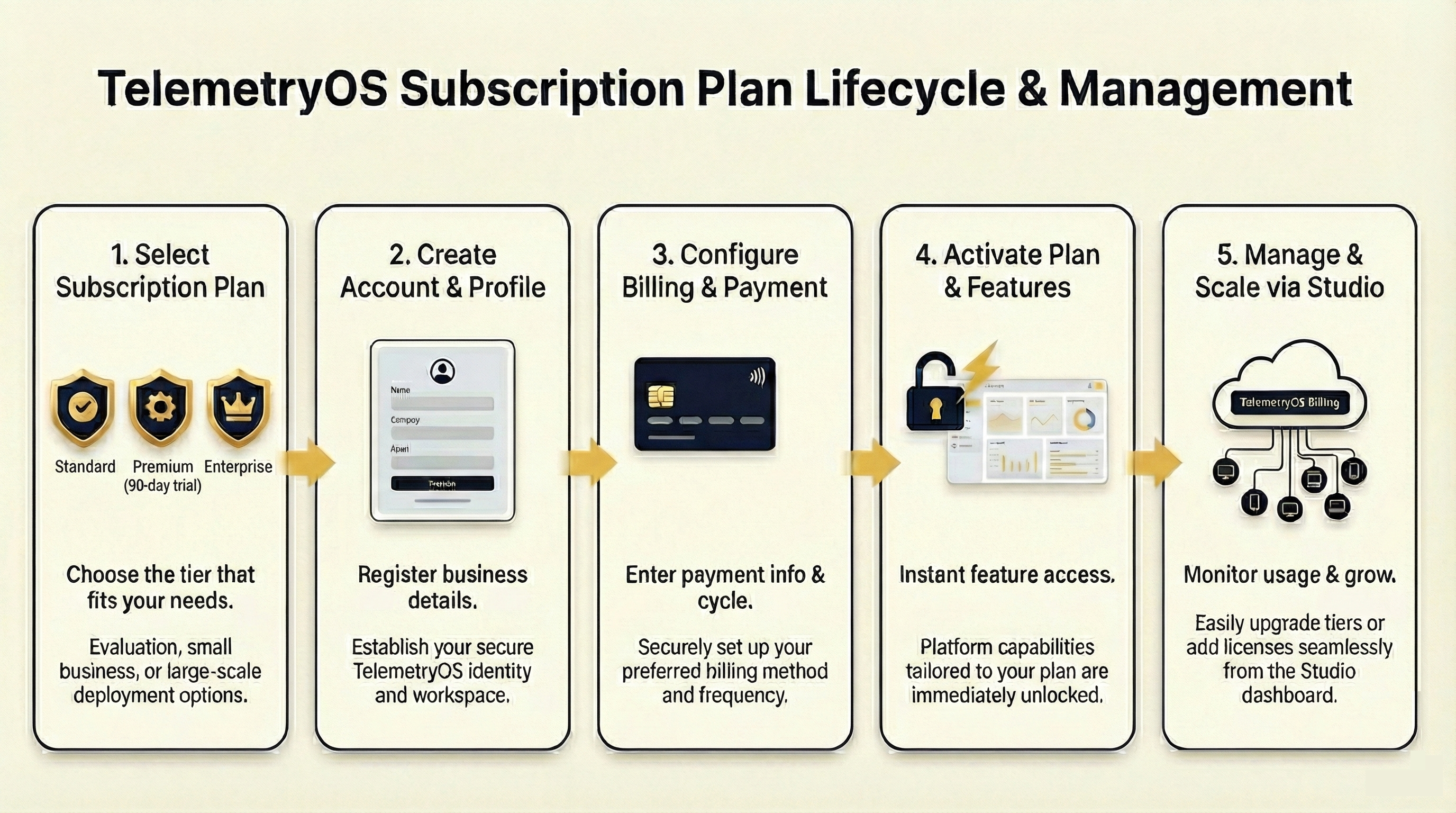
How Billing Works
- Annual terms: Subscriptions renew annually. Most customers pay in advance for the term; Enterprise accounts may use custom invoicing.
- Currency and methods: Pricing is in USD. Self‑serve plans use credit/debit via our billing provider; Enterprise may use ACH or wire.
- Auto‑renewal: Subscriptions renew automatically unless changed before the renewal date.
- Device licenses: Active Node devices consume annual license entitlements. Genuine Node devices include one year from original in-service date and require paid coverage after that included year unless spare capacity already exists.
- Renewal alignment: Device-license renewals align to the account anniversary. Mid-year paid coverage and remaining included Node coverage receive explicit overlap credits on the annual renewal invoice.
Making Subscription Changes
Think in terms of expected effects rather than buttons to click:
| Scenario | What it means | Typical effect |
|---|---|---|
| Upgrade to a higher tier | Needs outgrow the current plan (scale, integrations, support) | Takes effect immediately; charges are usually prorated; features unlock right away |
| Downgrade to a lower tier | You’re consolidating usage or simplifying features | Takes effect at the next renewal; ensure device, storage, and features fit the lower tier |
| Cancel at term end | You won’t continue after the current cycle | Access continues until the end of term; no refunds for unused time |
| Payment failure | A payment method needs attention | Grace periods may apply; service can become restricted if unresolved |
Device License States
Devices can be licensed, pending payment, expired, or covered through an included Node date. When pairing or provisioning needs a paid license and the account has no unused capacity, Billing-Service creates an invoice and the device remains pending until payment succeeds. If paid coverage expires without payment, the device reports a license-expired state. Devices inside their included Node coverage remain covered until that included date.
For reseller-managed child accounts, commercial actions invoice the reseller. The child account sees pending reseller payment until the reseller invoice is paid and license coverage is released.
Roles and Responsibilities
- Financial owners: Keep payment methods current, review renewal notices, and handle procurement requirements.
- Technical owners: Ensure device counts, storage, and integrations match the selected tier.
- Program owners: Align plans to outcomes (content cadence, support expectations, governance).
Policies
- Non‑refundable annual fees: Annual charges aren’t refunded once the term begins.
- Credits and proration: Upgrades often apply prorated charges; credits from downgrades typically apply at renewal.
- Data retention: After cancellation, data is retained for a limited period for export and potential reactivation.
Updated 5 months ago